
The Stones Still Stand
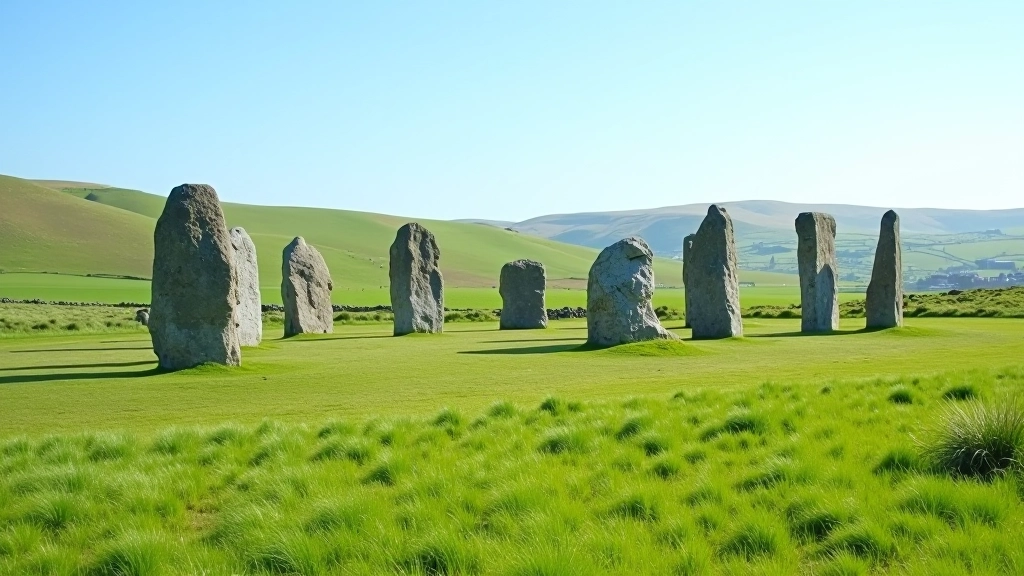
Walk the fields around Drombeg or any of West Cork's dolmen sites and you're literally standing in a landscape shaped 5,000 years ago. These aren't abstract historical monuments — they're real rocks, often massive ones, that somebody deliberately moved into place. The effort involved makes you pause. We're talking about structures built without machinery, without wheels, without metal tools.
The Bronze Age in Ireland lasted roughly from 2300 to 500 BC, but the megaliths themselves — the stone circles, passage tombs, and dolmens — were built mostly in the earlier Neolithic and Chalcolithic periods, stretching back to 4000 BC or earlier. West Cork's collection is particularly dense. You've got Drombeg's stone circle with its distinctive recumbent stone facing southwest. You've got the Glandore dolmens overlooking the harbour. You've got dozens of smaller monuments scattered across the countryside that most people drive past without noticing.
Key fact: Drombeg Stone Circle contains 17 stones arranged in a near-perfect circle roughly 9 meters in diameter. The recumbent stone (the one lying flat) sits at the southwestern edge, positioned to align with the winter solstice sunset.
How We Know Their Age
Before radiocarbon dating became standard, archaeologists had to piece together timelines from pottery shards, tool styles, and burial goods found near the stones. Now we can actually measure the decay of carbon-14 in organic materials — bone, charcoal, wood — and get dates accurate within a century or two.
The challenge? Many of these sites have been disturbed over centuries. Farmers cleared stones for field walls. Treasure hunters dug around looking for gold. Weather's had millennia to work on everything. When archaeologists do find datable material — cremated bone in a burial chamber, for instance — it often comes from the monument's use phase, not its construction. So we're dating when people used the site, which might be centuries after it was built.
Still, the pattern's clear. West Cork's megalithic tradition spans roughly 2,000 years. The earliest passage tombs date to around 3800 BC. Stone circles came later, mostly between 2500 and 1500 BC. Some sites show evidence of use right through the Bronze Age and even into early medieval times.

The Astronomical Alignment Question
This is where things get genuinely fascinating. It's not speculation — it's measurable. The winter solstice sunset at Drombeg aligns directly with the gap between two standing stones when viewed from the circle's center. This isn't random chance. Similar alignments show up at stone circles across Britain and Ireland. Newgrange's passage tomb in County Meath is famous for its winter solstice illumination, where sunlight floods the inner chamber for roughly 17 minutes around December 21st.
But here's where it gets complicated. Did these ancient people deliberately engineer astronomical alignments? Almost certainly, yes — the mathematical precision is too consistent. But why? Calendars for agriculture? Ritual significance tied to seasonal cycles? Ancestor veneration linked to celestial movements? The honest answer is we don't know. We can measure the alignments. We can't read minds from 5,000 years ago.
What we do know is that these communities had sophisticated knowledge of astronomy. They'd watched the sky for generations. They understood patterns. And they invested enormous labour in building monuments aligned to those patterns. That commitment tells you something about what mattered to them.
What These Sites Actually Were
The easy assumption is that all megaliths were tombs. Many were. Passage tombs, court tombs, and portal tombs clearly served burial functions — you find cremated remains, grave goods, sometimes intact burials inside them. But stone circles? Henges? Standing stones? The evidence is murkier.
Archaeologists think these were gathering places. Ritual spaces. Places where communities came together for ceremonies, seasonal festivals, or important social events. The labour required to build them — moving stones weighing tons, organizing dozens or hundreds of people — suggests they were communal projects. The kind of thing that reinforced group identity and shared purpose.
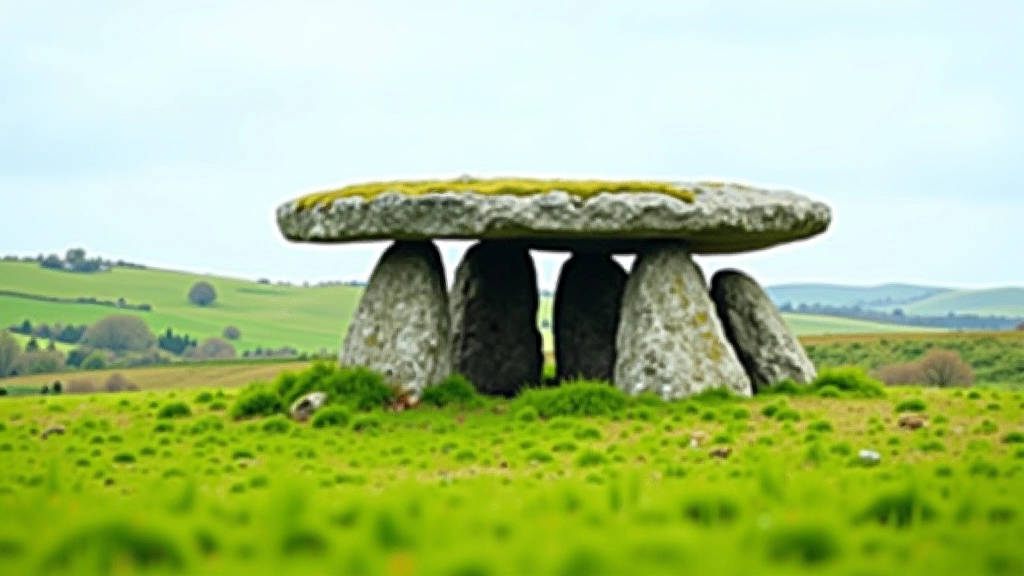
Dolmens in particular show interesting patterns. They're often positioned on ridgelines or visible from multiple directions. Some scholars think they were territorial markers — ways of saying "this land belongs to our people" — visible from great distances. Others argue they were meeting places, visible enough that scattered communities could find them easily.
Walking These Sites Today
If you're visiting West Cork's megalithic sites, the experience changes when you understand what you're looking at. Drombeg isn't just a pretty circle of stones — it's a place where people gathered under the winter sky, watching the sun slip toward the horizon exactly where their ancestors had aligned it centuries before. The Glandore dolmens aren't just odd rock formations — they're part of a system of monuments that marked territory and hosted community events across a landscape.
Most of these sites are freely accessible. Many are on public land or on roads where you can view them from nearby. The best time to visit is early morning or late afternoon — the light's better, and you'll avoid crowds if there are any. Bring good walking shoes. West Cork's countryside is beautiful but wet, and the ground around these monuments is often boggy or uneven.
Take time at each site. Stand where the ancient people stood. If it's around the winter solstice, try to be at Drombeg around 4 PM to see that alignment happen. It's a visceral way to connect with people who died 5,000 years ago but who left something behind that still works exactly as they intended.
The Stones Speak, If You Listen
West Cork's megaliths aren't mysterious or magical — they're evidence. Evidence that communities living 5,000 years ago were organized, mathematically sophisticated, and committed to building something that would last. They didn't know we'd be here looking at their work. They built for themselves, for their descendants, maybe for eternity. And it worked.
Understanding the archaeological context — the dating methods, the alignment theories, the likely purposes — doesn't diminish these sites. It enhances them. You're not just looking at old rocks. You're seeing the physical expression of a culture that cared about the seasons, about community, about leaving a mark on the landscape.
Disclaimer
This article presents educational information about Bronze Age megaliths based on archaeological research and scholarly consensus. Archaeological interpretation of ancient sites involves ongoing research and debate — new evidence can revise our understanding of these monuments. Specific alignments and dating are based on published archaeological studies, but individual sites may have alternative interpretations. Always check local conditions and access permissions before visiting archaeological sites, and respect any protection measures in place.